

The Antarctica Marathon is just six weeks away.
Last week, I sat down to watch the replay of the official briefing meeting and was met with slide after slide of information to absorb. As you can imagine, there’s a lot to keep in mind when preparing for a race like this!
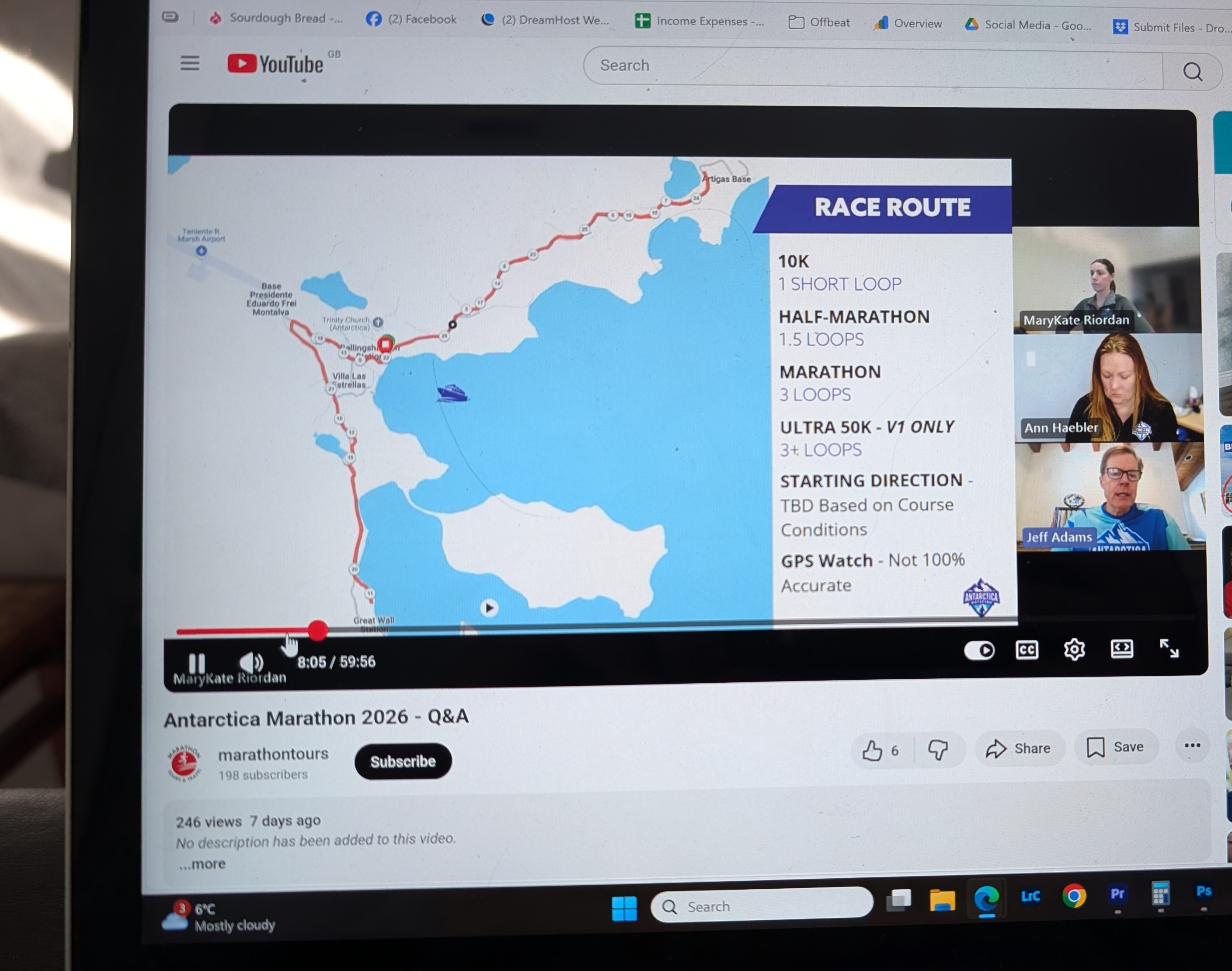
It’s not just the marathon itself, which comes with its own unique challenges, but also the logistics of travelling to the other end of the world, a multi-day voyage across the Drake Passage, and everything that comes with racing in one of the most remote places on Earth.
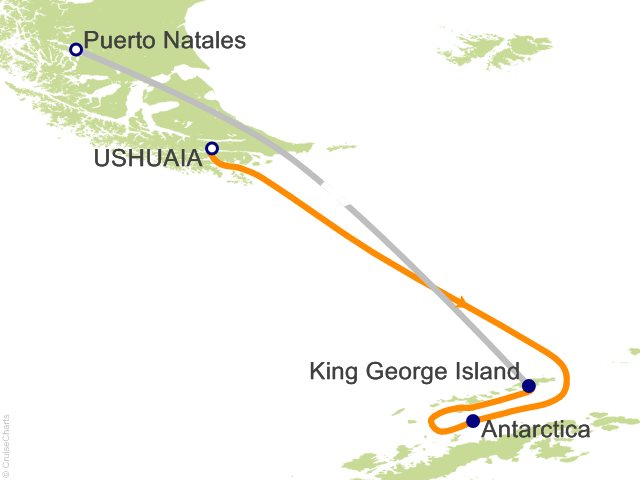
I’m now four weeks into training, and it was during this week that I really had to admit something to myself: I’m going to be doing almost everything wrong in this race.
This will be my ninth full marathon, so I have a pretty good understanding of what marathon training is supposed to look like. Typically, runners follow a 16–20 week training block, gradually building a solid base before tapering toward race day.
This race, however, has given me just ten weeks to prepare.
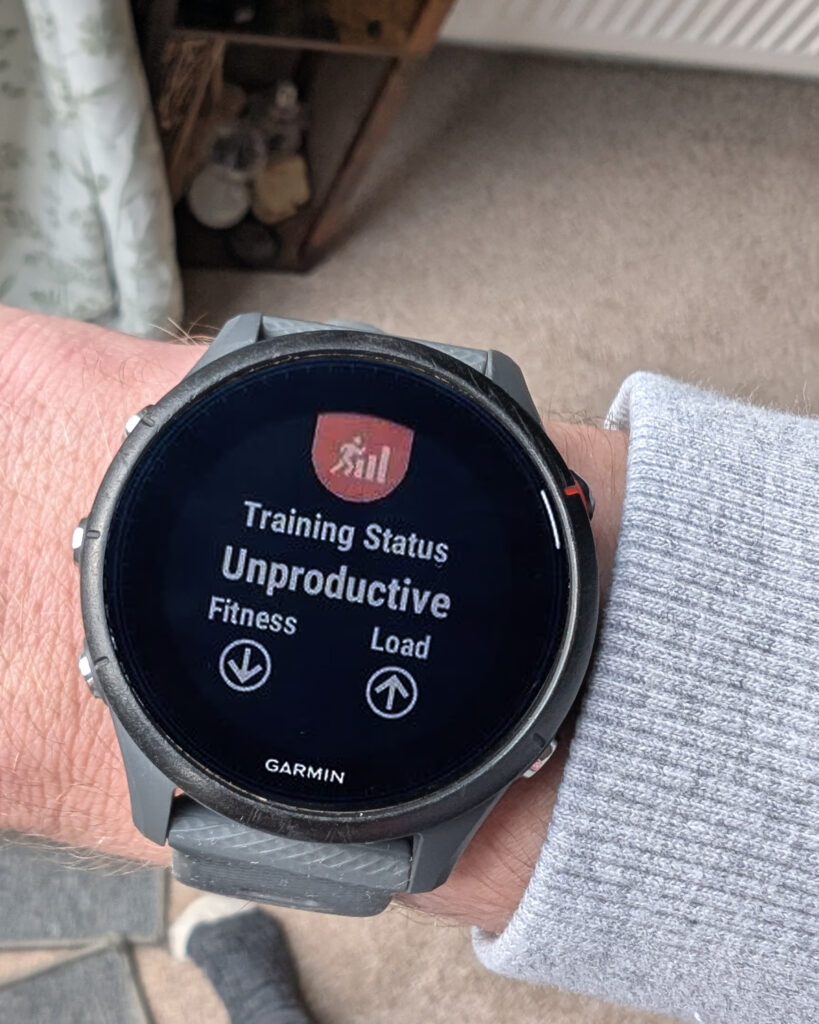
Thankfully, running more than 2,300 kilometers last year has provided a decent foundation to work from. Even so, jumping from a handful of casual runs in December, followed by 2 weeks off over Christmas, straight into 55 km per week has definitely sent my legs into panic mode. My watch seems to agree and it’s been constantly warning me that I’ve lost my mind and should probably reconsider my life choices.
This marathon is breaking every rule a marathoner is meant to follow.
I’ll likely be racing in gear that’s still relatively new, simply because it hasn’t been cold enough to properly test everything. During the race I will be completely reliant on my own fuel and water. I’ll be eating unfamiliar foods, sleeping in unfamiliar beds, and living entirely new routines in the lead-up to race day. There’s very few things I’ll be in control of, which is totally opposite to how I like to be before race day.
But I think that’s exactly what will make this race so special.
It’s going to be unexpected.
It’s going to be challenging.
And it’s going to be unlike any race I’ve ever done before.
That brings me to fueling and what I’ll be eating during the race, and the reason for this week’s post. With such strict rules in place, fueling requires a very different approach.
All runners must be 100% self-supported. That means no aid stations, no water waiting halfway through, and no spectators offering sweets along the course. Everything I need, I have to carry myself.
On top of that, nothing I bring can have any packaging.
Antarctica is an incredibly sensitive ecological environment, and there’s a conscious effort to leave as little impact as possible. No litter, no waste, and no chance of anything blowing away in the wind. Whatever goes with me comes back with me.
In almost all of my previous races, I’ve relied on energy gels. The general recommendation is around 30–60 grams of carbohydrates per hour, which for me usually works out to roughly one gel every 40 minutes. Under normal circumstances, that would mean carrying six or seven gels for the marathon. Of course, this race calls for some adaptation.
Instead of individual gels, I’ll be decanting them all into a single soft flask, something secure, reusable, and far less likely to escape into the Antarctic winds. I’ll also be alternating between gels and energy chews, all of which will be unwrapped ahead of time and carried in a way that eliminates any risk of litter.
It’s not the fueling strategy I’m used to but then again, nothing about this race is.

Water can be dropped at the start line and at one midway point on the course, where runners can stop for a self-service water break. My plan is to start with two bottles, alongside a hydration backpack that will carry both water and fuel, plus a few spare pairs of socks and gloves, just in case conditions demand it.
And, of course, there are no toilets on the course either… so hydration will need to be strategic.
I’ll also need to remember to pack a few extra bags of my favourite post-race candies to celebrate once I’m safely back on the ship.
Training-wise, week four was slightly drier than previous weeks, but still packed with hills, mud, trails, and good company.
I kicked things off with a fun hill relay session with my running club, teams of three taking turns charging up and down a short, sharp climb. It was hard work, but the kind of hard work that feels more fun when you’re with friends.
Midweek brought a wet run through a nearby military training area, weaving between soldiers in the middle of their own sessions. Dodging big puddles and enjoying the tiny glimpses of sun through the woods added an unexpected and entertaining twist to an otherwise hilly run.



Later in the week, I joined the club for a nice social run at a strong, steady pace before wrapping things up with my weekly long run. That included a 20 km outing, a sharp 22-minute pacing effort at the local parkrun, and then a few extra miles tacked on afterwards with no route, no plan, just running.



By the end of the week, I could feel things starting to settle in my legs and my mind.
My body seems to have adapted to the workload, I’ve logged just over 250 km for the year already, and I’m sleeping deeply each night. With every run, I’m feeling stronger, more resilient, and a little closer to race day, all while continuing to do things almost entirely the wrong way.
And somehow, that feels exactly right.
Leave a Reply
You must be logged in to post a comment.