

Well, here I am fully embracing my quick training plan ahead of March’s marathon in Antarctica.
This week I thought I’d share a bit about what I’ve been learning about the course and the terrain that I’ll be running on as it seems to be the most asked question so far!
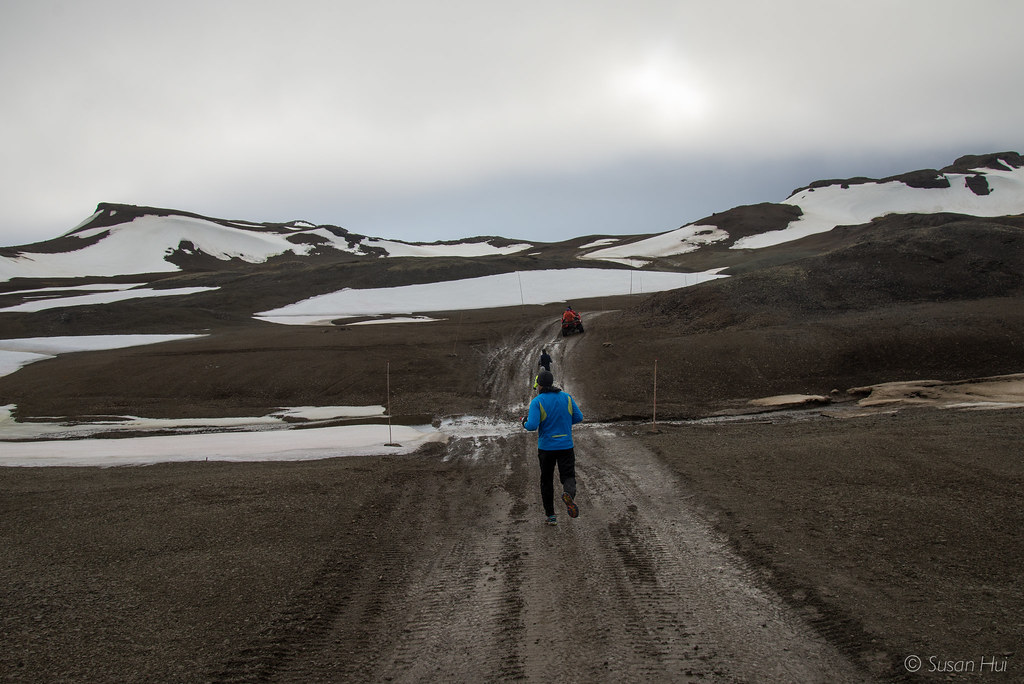
In short, it’s not quite what you expect when you think about running a marathon in Antarctica. Admittedly when I first heard about the race, I had visions of running in an expanse of white snow, with ice crunching beneath my feet as I ran through a winter wonderland. The reality is, while there will be snow on parts of the island the race is happening on, the majority of the race will take place on a rugged dirt/mud road that links four of the science bases on King George Island.
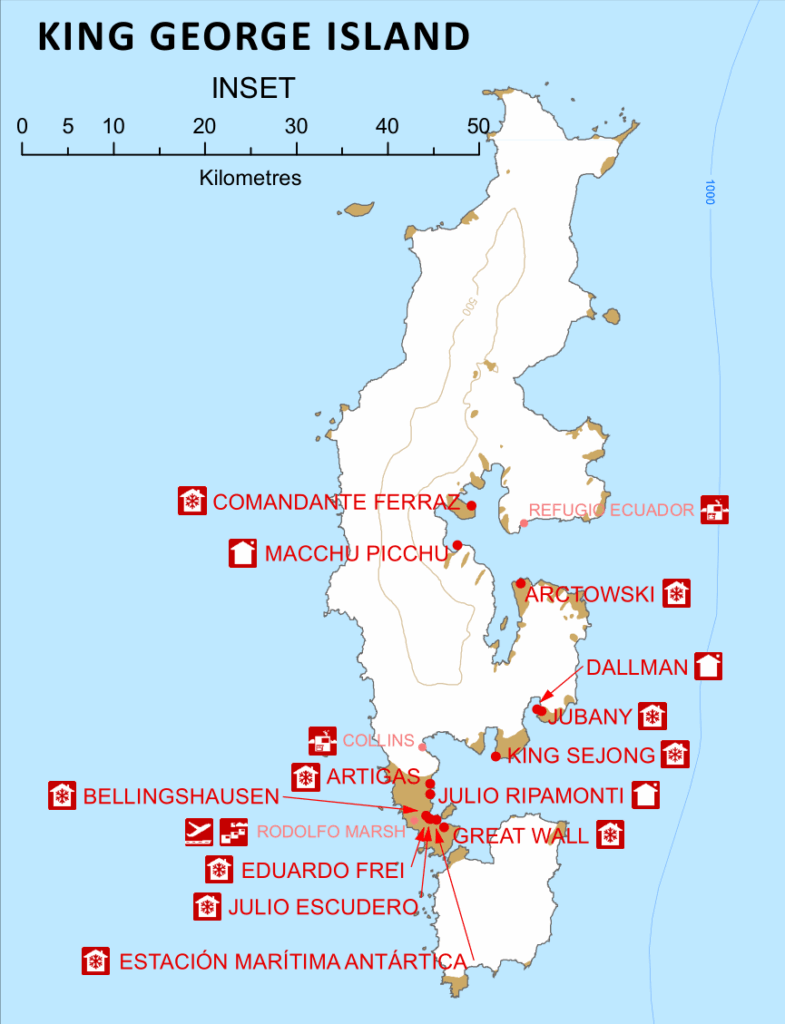
The course changes all the time as it is purely dependent on the conditions at the time, once the ship arrives in the area, a team goes out to assess the road and will decided how long the out and back loops will be. According to the organizers, they prefer to have it be a 3 lap course, visiting the four science bases in that area of King George Island. Starting near Bellingshausen, the Russian Base, and heading out to the others, Artigas Base (Uruguayan), the Frei Base (Chilean), and the Great Wall Base (Chinese). It goes without saying that this road isn’t exactly a road, but more of a dirt track that links the bases. Runners are warned to be prepared to get muddy, wet, and to embrace the challenge of the conditions.
The distance of each lap can change and while the altitude of the island isn’t considerably high, the rolling hills and the challenge of the mud and the wind can make it quite a difficult course to run. In order to protect the highly sensitive natural environment, runners are prohibited from going off course which means we’ll have to stick to the track regardless of the mud and water.
With that said, I’m having to push myself outside of my comfort zone a little bit. Over the past few years I’ve turned into mostly a flat road runner. I’ve enjoyed running the odd trail race or casual run through the woods when it isn’t wet, but now with a marathon of mud on my horizon I’m definitely needing to get out and into the more challenging and difficult sections of our nearby trails.
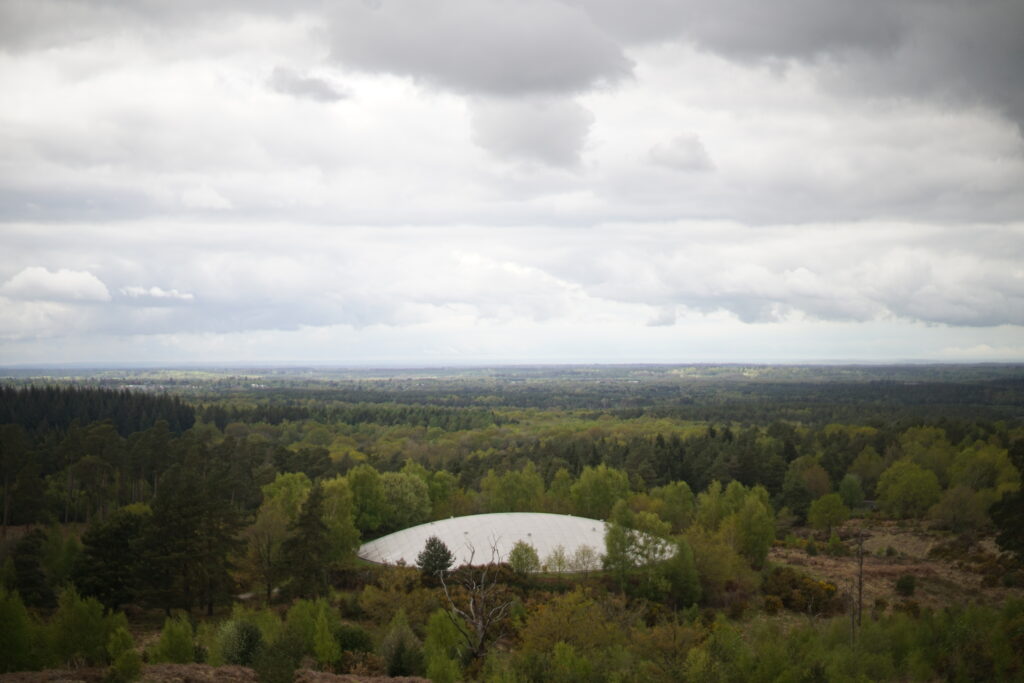
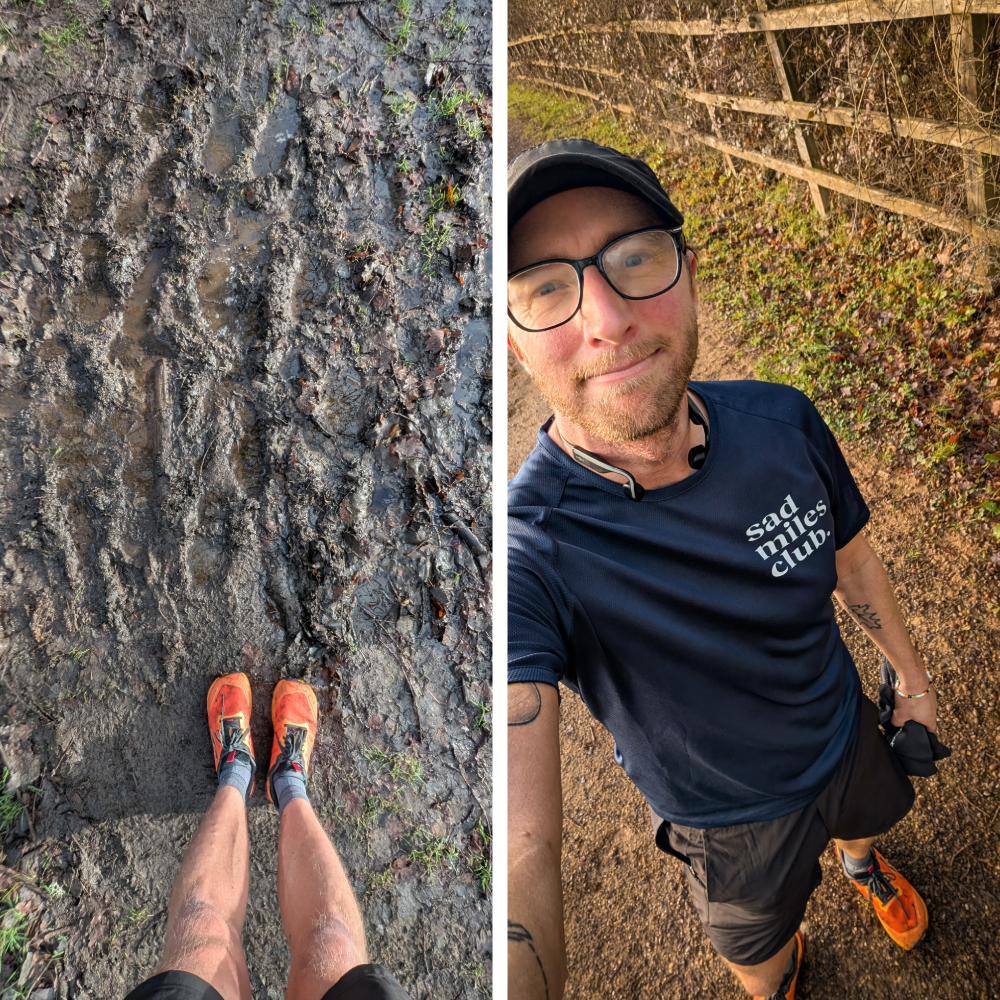
Thankfully we live right next to a massive military training area known locally as Caesar’s Camp. It is a 600+ acre collection of hills, thick forests, lakes and winding trails that can certainly give me as much hill training as I need to get ready. The highest point of the area is an iron age hillfort with impressive views all the way to London. It is often muddy (especially with the recent rain we’ve had) so I’ve been making myself get reacquainted with the terrain and trails there. This week I picked my way through a few muddy sections just to get a taste of what is to come. (Though I’ll certainly be switching the cows for penguins.)
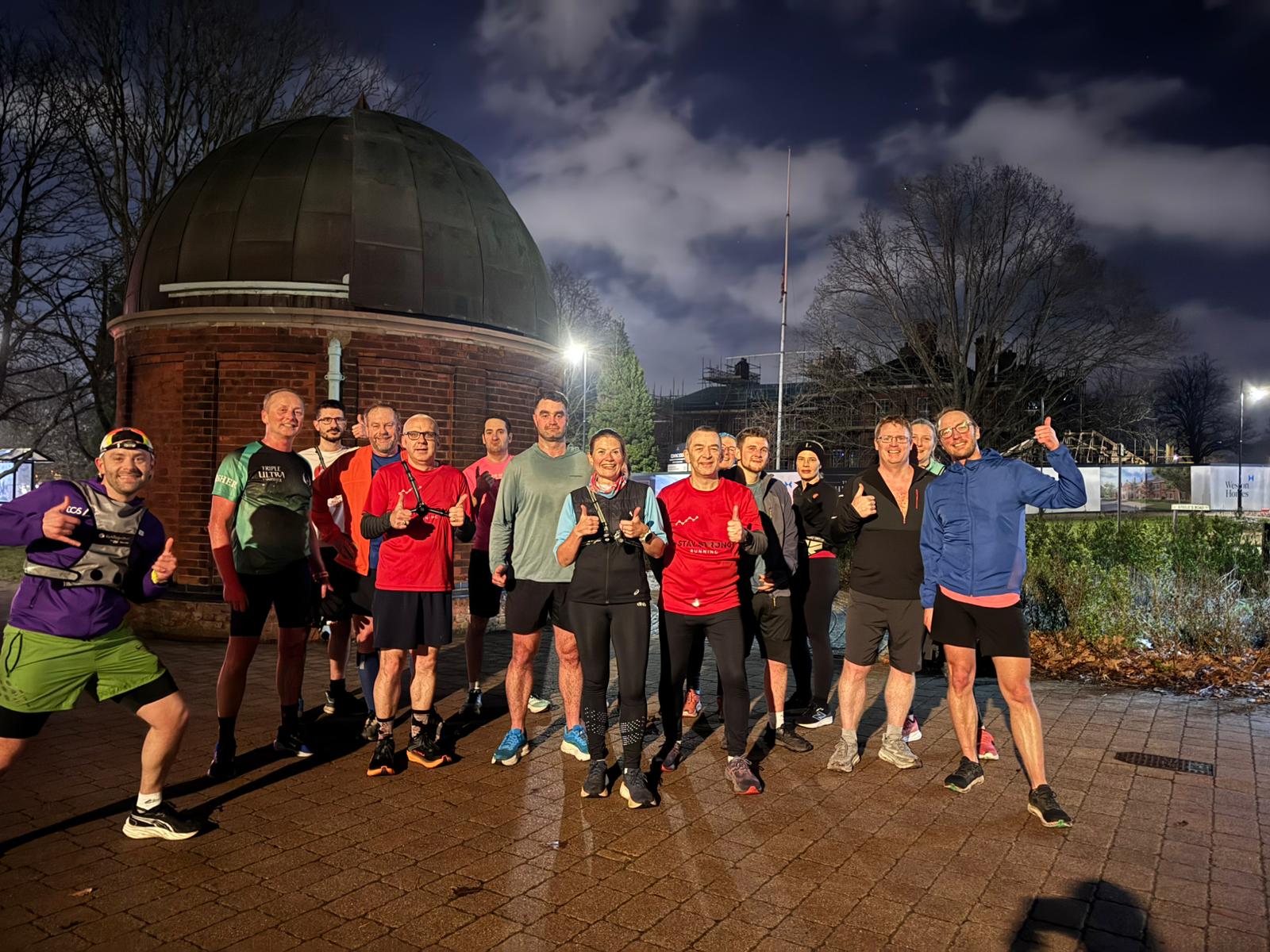
It also helps that my running club is in the early weeks of a hill series where every Monday night brings with it a delightfully painful effort session of literally running up a hill as fast as you can over and over again until the time is up. It is definitely my least favourite effort session of all but I know that the hills will certainly help me navigate my way through the undulating course that Antarctica will bring. It also doesn’t hurt that my club is one of the most supportive, encouraging, and humorous ones you could ever dream of running with.
This week I started to feel that familiar feeling of fatigue in my legs, both from the sudden increase in my mileage compared to the last month as well as from breaking in my new shoes. I’ve been trying to find the right balance of pushing myself without getting injured and that meant reducing the miles a tiny bit this week but running multiple days in a row to get used to running on tired legs.
My long run this week was a wet ‘sandwich’ run where I set out early on Saturday to get 6km in before running at our local park run, volunteering to pace the 23minute finish time, and then continuing on for another 7km to bring the day to a decent 18km total. I enjoy breaking up the long run with a park run in the middle as it is a good chance to see friends, be part of the social aspect for the 5km run and then use that motivation to push on for the rest of the run. This weekend’s course was (by no surprise) a muddy one, but I finished my pacing right on time and felt good about getting people to a new PB.

The total mileage for my second week was 58km which I’m pleased with, despite my legs being achy (and my watch telling me I needed 80 hours of recovery after my long run). And I’m looking foward to the third week, incorporating some more hills and some more trails into my training. It’s hard to believe that the whole experience is less than two months away!
Is there anything you’d like to know about running and training for the Antarctica Marathon?
Leave a Reply
You must be logged in to post a comment.